
Table of Contents
- What to Have Ready Before You Request a Pebble Paving Quote
- How to Prepare Concrete for Pebble Resurfacing
- Pebble Paving Cost Per m2: The Variables That Move Your Quote
- Resin-Bound vs Loose Pebble: Which Quote Suits Your Project
- Drainage, Permeability and Site Rules to Check Before You Sign
- DIY vs Professional Installation: What the Quote Really Covers
- Pebble Paving Maintenance Tips and What to Ask About Longevity
- How to Compare Pebble Paving Quotes Line by Line
- Frequently Asked Questions
Last Updated: September 16, 2026
What to Have Ready Before You Request a Pebble Paving Quote
Getting a quote for pebble paving starts with preparation, not paperwork. At Pebble Mix, we’ve spent over 50 years installing pebble paving across Victoria, and the smoothest jobs are the ones where the homeowner did a little homework first.
Measure the Area and Note the Surface Condition
Measure the length and width of every surface you want resurfaced, then multiply to get the area in square metres. Add a rough sketch showing where the driveway meets the footpath, where the patio connects to the house, and any steps or edges.
Photos, Access and Drainage Notes
Take photos in daylight from a few angles, plus close-ups of any cracks or stains. Mention how a crew would access the area: is there side gate clearance, or would equipment need to come through the house? Is there room for a truck to park nearby?
How to Prepare Concrete for Pebble Resurfacing
Preparation is where a pebble paving job is won or lost. A quality installer will clean the slab, repair structural cracks, and create the right surface profile so the new layer bonds properly. Skip this step and the finish can lift, crack or discolour within a few years.
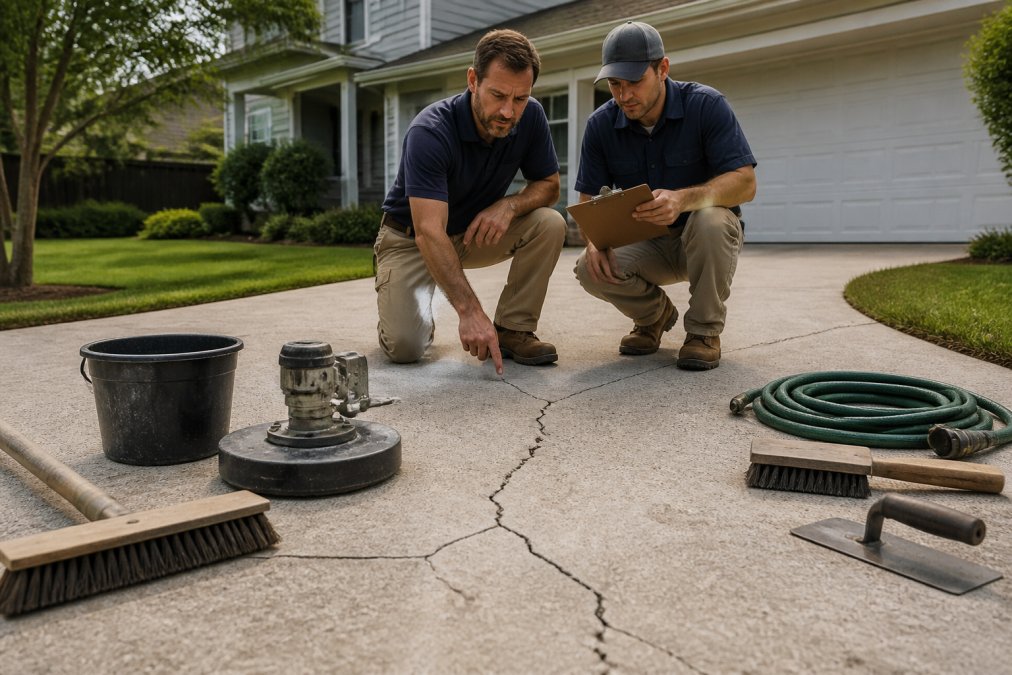
Cleaning, Crack Repair and Surface Prep
The process typically follows a set sequence:
- Pressure clean the slab to remove dirt, moss, oil and loose material
- Treat oil stains so the binder can adhere
- Open and fill structural cracks with a suitable repair compound
- Grind or etch the surface to create a mechanical key
- Check falls and drainage so water still runs away from the house
- Apply the primer or bonding coat before the pebble layer goes down
Hairline cracks are usually straightforward to bridge; wider cracks that move with the slab need proper repair first, which is why a site inspection matters. If you’re weighing up whether resurfacing can save an old slab, ask your installer directly.
Pebble Paving Cost Per m2: The Variables That Move Your Quote
Pebble paving cost per m2 is not a single number. It’s the sum of several variables, and understanding them lets you compare quotes on equal terms. Because every site differs, Pebble Mix provides pricing based on a site inspection.
Site Access, Sub-Base and Coverage
The main cost drivers are:
|
Cost Variable |
What Drives It |
Typical Impact on Quote |
|---|---|---|
|
Area size |
Total square metres to cover |
Larger areas lower the rate per m2 |
|
Site access |
Gate width, parking, distance to slab |
Tight access adds labour time |
|
Surface condition |
Cracks, oil, uneven sections |
More prep raises labour cost |
|
Sub-base and drainage |
Falls, pooling, extra drainage work |
Can require additional materials |
|
Finish and colour |
Resin-bound vs loose pebble, custom colour |
Premium finishes cost more |
|
Edge detailing |
Steps, borders, garden edges |
Detail work is slower per m2 |
Coverage also matters. Resin-bound systems are typically laid at a set depth, so aggregate and binder scale directly with the area. Loose pebble needs a deeper layer and edging to hold it in place. Ask your installer to break the quote into materials, labour and preparation so you can see where the money goes.
Resin-Bound vs Loose Pebble: Which Quote Suits Your Project
Resin-bound pebble paving is a mix of aggregate and a clear resin binder, trowelled to a smooth, firm surface. Loose pebble is aggregate laid over a base, held in place by edging rather than a binder.
Drainage, Permeability and Site Rules to Check Before You Sign
Drainage is where pebble paving earns its keep, and where local rules apply. Permeable paving lets water drain through the surface rather than running off into stormwater, reducing pooling and taking pressure off drainage systems.
Before signing, confirm:
- How the system handles water on your specific site
- Whether your local council requires a planning or building permit for the work
- Whether any changes to stormwater connection are needed
- How the installer will manage runoff during heavy rain
DIY vs Professional Installation: What the Quote Really Covers
DIY pebble paving looks tempting on paper, and there are kits and tutorials everywhere. In practice, the failure rate is high, and the reasons are almost always the same: poor surface preparation, incorrect binder ratios, and no proper fall for drainage.
The Three Failure Mechanisms Behind Most DIY Jobs
Delamination from inadequate surface prep. Resin-bound systems rely on a mechanical and chemical bond to the substrate. If the slab isn’t ground or etched, and oil or curing compounds aren’t removed, the binder has nothing to grip. The result looks fine for a summer or two, then lifts in sheets after hot days followed by heavy rain.
What a Professional Quote Actually Prices
A professional quote covers more than the visible finish. It typically includes:
- Site inspection and moisture/fall assessment
- Surface preparation: pressure cleaning, oil treatment, crack repair, grinding or etching
- Primer or bonding coat matched to the substrate
- Correctly batched binder, mixed and laid within its working window
- Edge detailing, expansion joints and transitions to existing surfaces
- Clean-up and disposal of spoil
- A workmanship warranty, and often a manufacturer-backed product warranty
The Real Cost Comparison
When people compare a DIY kit price against a professional quote, they usually compare the wrong things. The fair comparison is:
|
Line item |
DIY |
Professional |
|---|---|---|
|
Materials (aggregate, binder, primer, edging) |
Paid |
Included |
|
Surface prep tools (grinder, etcher, pressure cleaner) |
Bought or hired |
Included |
|
Labour |
Your time |
Included |
|
Waste disposal |
Your cost |
Included |
|
Redo cost if it fails |
Yours |
Warranty |
|
Resale/insurance disclosure |
DIY work may need to be declared |
Documented |
When DIY Can Make Sense
DIY is not automatically wrong. For small, low-traffic decorative areas, a garden bed border, a shallow planter top, a non-structural path under 5 m², a loose pebble install over a properly prepared base is within reach of a careful homeowner. The trade-off: loose pebble needs periodic topping up and edging maintenance, and isn’t suitable for driveways or anywhere a wheelbarrow, pram or wheelchair needs to roll.
Pebble Paving Maintenance Tips and What to Ask About Longevity
Pebble paving maintenance tips are refreshingly short, but the advice differs sharply depending on whether you’ve installed resin-bound or loose pebble, and on the site’s exposure. A pool surround in full summer sun ages differently from a shaded driveway under trees, and the maintenance schedule should reflect that.
Resin-Bound: What Actually Matters
A resin-bound surface is UV resistant and easy to clean, which is why it suits pool surrounds and driveways in harsh sun. Routine care looks like this:
- Sweep or blow off leaves and debris every few weeks, leaf litter left damp on the surface can stain and, over time, encourage moss at the edges
- Hose down and spot-clean oil or dirt with mild detergent and a soft brush
- Avoid harsh acid cleaners, which can dull or etch the binder
- Re-seal only if your installer recommends it for your specific finish and exposure, not every resin system needs it, and unnecessary sealing can trap moisture
- Address any edge lifting early, before water gets under the surface and spreads the problem
Loose Pebble: A Different Job Entirely
Loose pebble needs more attention than most buyers expect. Because there’s no binder, the aggregate migrates:
- Rake or redistribute pebbles back from edges and low points every few months
- Top up the layer as it thins, expect to add aggregate periodically over the life of the surface
- Check and repair edging, which is what holds the whole system together
- Remove weeds and leaf litter promptly, as organic build-up creates a seed bed
- Replenish any weed mat or geotextile if it becomes exposed
Longevity: What to Ask, and What the Answers Should Sound Like
When you review a quote, ask these questions directly:
- What warranty covers workmanship and materials, and how long is each? Workmanship warranties are typically shorter than product warranties, and the two cover different things.
- What’s the expected lifespan under normal use? A confident installer will give a range and explain what drives the low and high end, exposure, traffic, substrate condition.
- Is the finish UV stable, and how does it handle oil and garden stains? Ask specifically about the binder, not just the aggregate.
- What does maintenance actually involve year to year? Ask for it in writing, including any recommended re-sealing interval.
- What voids the warranty? Common exclusions include pressure washing above a specified pressure, acid cleaning, and damage from vehicle fluids.
- Is the substrate itself warranted? If the underlying slab moves or cracks, the surface above it will follow, clarify who carries that risk.
A confident installer will answer all of these without hesitation. Vague answers are a red flag.
A Note on Permeability Over Time
Permeable surfaces can lose infiltration capacity as fine dirt, pollen and organic matter work into the pores. Periodic cleaning restores most of it, but if your site relies on the surface for stormwater management, for example, where a council or water authority approved it as part of a water-sensitive design, keep a record of cleaning and any re-sealing, because you may be asked to demonstrate the surface is still performing as designed.
How to Compare Pebble Paving Quotes Line by Line
Work through each quote and check:
- Is the system resin-bound or loose pebble?
- Is surface preparation and crack repair included, or listed as an extra?
- Is drainage addressed, or assumed?
- Are edges, steps and borders priced?
- What warranty is offered, and for how long?
- Is the quote fixed, or subject to variation?
At Pebble Mix, our quotes follow a site inspection so the number reflects your actual slab, access and drainage rather than a guess. With over 50 years in the trade and a UV-resistant, easy-to-clean finish, we’ve resurfaced everything from tired driveways to pool areas that John Coleman says ‘now looks brand new’.
Frequently Asked Questions
How much does pebble paving cost per square metre?
Pebble paving cost per m2 depends on the area size, surface condition, pebble size and colour, access, and whether resin-bound or loose pebble is used. Quotes usually separate supply, surface preparation, and labour. Because rates change with material and site conditions, request a written quote based on a site inspection rather than relying on a generic per-square-metre figure.
Can you apply pebble paving over existing concrete surfaces?
Yes, pebble paving can be applied over existing concrete when the slab is structurally sound and not lifting or crumbling. Hairline cracks are typically filled and the surface is cleaned and prepped before the pebble layer goes down. If the concrete is badly broken or has movement, the quote should include repairs or removal first. A site inspection confirms whether resurfacing is suitable.
What information do contractors need to provide an accurate paving quote?
Provide the approximate area in square metres, photos of the surface, note any cracks or drainage issues, and mention access (gates, slopes, tight corners). Also state your preferred pebble size, colour, and finish. The more detail you give, the fewer assumptions appear in the quote. Most specialists will still do a site inspection to confirm measurements and check the sub-base.
How long does a professional pebble paving installation take?
Most residential driveways and patios take a few days from prep to finish, depending on area size, weather, and curing time. Surface preparation, crack repair, and base work often take as long as the pebble application itself. Ask your contractor for a written schedule and confirm how long before the surface can handle foot traffic and vehicles. Getting an accurate quote for pebble paving comes down to preparation and asking the right questions. Pebble Mix offers professional supply and installation across Victoria, with customised colour options, a UV-resistant and durable finish, and more than 50 years of experience behind every job. Call us today to arrange a site inspection and get a quote built around your driveway, patio or pool surround.